Shot peening induces a surface layer that contains compressive residual stress. It is this compressed surface layer that is largely responsible for improved fatigue performance

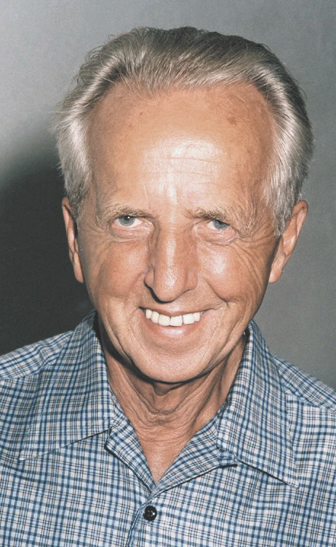
Professor David Kirk was born into a multi-generational steel-working family in Rotherham, South Yorkshire, England. His grandfather was the operational head of a rolling mill and his father was an open-hearth steelmaker and a part-time lecturer at Rotherham College of Arts and Technology. David won a scholarship to a local grammar school and his academic success secured three scholarships to the University of Birmingham where he studied Industrial Metallurgy. He was the first member of his family to attend university. Professor Kirk received a Department of Science scholarship after graduation. He then obtained a doctorate for a thesis titled “The Hot Working of Metals.”
Professor Kirk’s employment as a Research Fellow at the University of Birmingham proceeded a short period as a Senior Research Metallurgist at the International Nickel Company’s Research Laboratory in Birmingham. Professor Kirk then joined Coventry University as a Senior Lecturer in Metallurgy. He was promoted to Principal Lecturer in Metallurgy and then Chairman of the School of Materials at Coventry University. His initial research focused on X-ray residual stress measurement. This work prompted him to establish Coventry Science Consultants Ltd. Professor Kirk installed a shot peening research laboratory at the university with active encouragement and advice by the late Jack Plaster.
Upon retirement from the university, Professor Kirk became a Visiting Research Fellow and then was a Visiting Professor of Materials at Coventry University. Following his organization of the 5th International Conference on Shot Peening, he was elected Chairman of the International Scientific Committee for Shot Peening. The International Scientific Committee has since granted him “Life Member” status.
Professor Kirk received the 2001 “Shot Peener of the Year” award for his significant contributions to the advancement of shot peening.
Shot peening induces a surface layer that contains compressive residual stress. It is this compressed surface layer that is largely responsible for improved fatigue performance