Introduction
Shot peening rarely attracts attention outside specialist circles, yet it quietly protects the parts that matter most. When an aircraft structure survives a long service life, or when a rail component resists years of cyclic loading, it is often because the peening was consistent. That balance is difficult when parts are long, thin, or complex in shape. The engineering task is to achieve the required residual compressive stress without distorting the component, and to do so in a way that production teams can repeat day after day.
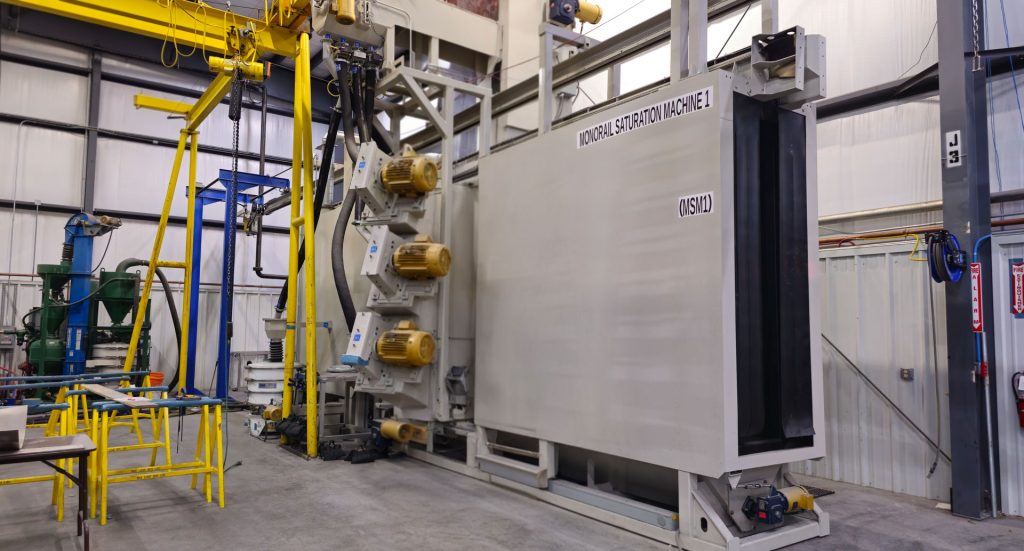
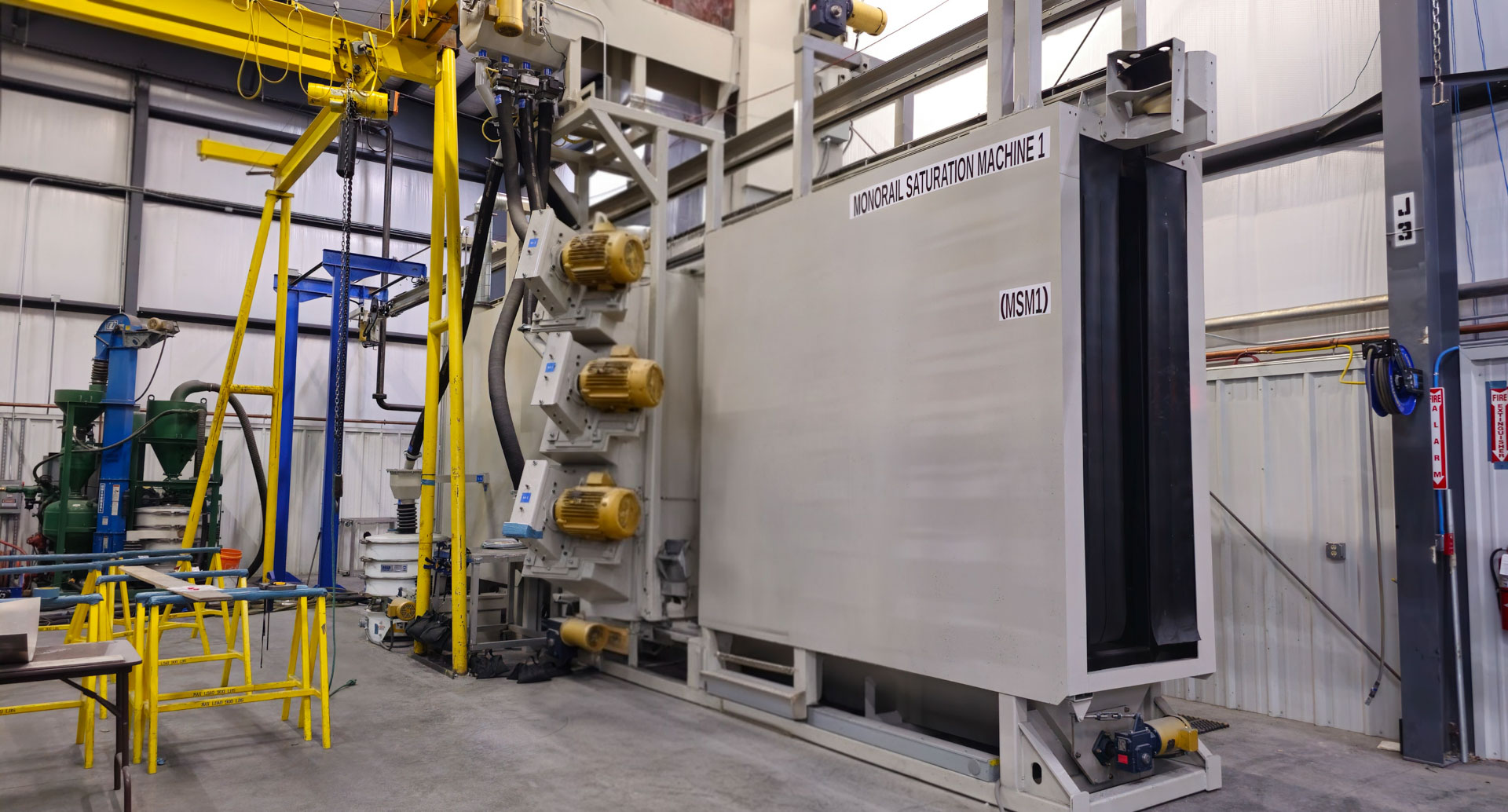
This work describes the migration from a legacy manual air routine, which occupied roughly a week per part, to a wheel‑type system with an integrated monorail and recipe‑driven controls. The result was a single, steady pass through the cell that finished in about twenty‑five minutes while maintaining low Almen A intensities and high coverage. Beyond the headline numbers, the value is that operators now work with clearer recipes, steadier handling, and a process that is easier to audit. Customer‑specific details are withheld by agreement, but the methods and results are transferable to similar programs.
Case study and measured impact
The change delivered an immediate improvement in output and operating cost. Cycle time fell by more than ninety‑five percent. Measured electrical draw for the wheel cell, materials handling, and the cartridge dust collector indicated a reduction in energy per part by roughly two orders of magnitude compared with the former compressor‑based routine. Using a conservative grid factor of 0.40 kg CO₂ per kilowatt‑hour, the calculated carbon per part dropped by approximately ninety‑seven to ninety‑eight percent. Coverage reached at least ninety‑eight percent, and the intended low Almen A window was held from end to end of the component.
| Parameter | Manual Air Peening | Wheel-Type Cell | Improvement |
| Cycle time per part | ≈ 40 hours | ≈ 25 minutes | > 95% faster |
| Energy per part | ≈ 1,200–1,800 kWh | ≈ 29–39 kWh | ≈ 97–98% lower |
| CO₂e per part* | ≈ 0.48–0.72 t | ≈ 0.012–0.015 t | ≈ 97–98% lower |
| Coverage | ≈ 95% (typical) | ≥ 98% | + 3% absolute |
| Almen intensity (A) | 0.006–0.010 (target) | 0.006–0.010 (held) | Within specification |
Table 1. Summary of measured outcomes
*Assumes 0.40 kg CO₂/kWh. Energy values compare compressor duty in the legacy process with measured draw for the wheel cell, materials handling, and a cartridge dust collector. Figures are order‑of‑magnitude guides to illustrate the scale of change.
Engineering the peening window
Low, uniform intensity on thin sections depends on sound kinematics and restraint. Single‑particle velocity from the control cage to the blade and on to impact was used to set wheel placement, throw angle, and standoff along the full travel of the part. Wheel speed was limited by variable‑frequency drives to a band near 1800 RPM. That limit protected delicate regions from over‑peening while maintaining enough energy for consistent coverage while also reducing blade wear.
Zone‑based recipes governed standoff, throw, and media flow so that the component could receive what it needed at each stage of travel. The integrated monorail provided steady, predictable movement through the chamber, which improved consistency and reduced handling risk. Verification was embedded from the start: saturation‑curve procedures established intensity, and per‑zone checks maintained thin sections near 0.006–0.008 A with thicker ends near 0.008–0.010 A. Day‑to‑day logs captured wheel speed, media flow, and line speed so the production record was clear and auditable. Commissioning and production practice followed the intent of AMS 2430/2432 for process control, SAE J443 for intensity via saturation curves, and SAE J2277 for coverage.
Media integrity and environmental control
Media quality was treated as a primary risk because the part was both delicate and high‑value. Cut‑wire media in a tight size band was supplied from a single‑medium reservoir with staged screening and air‑wash classification. Interlocks to the HMI and PLC prevented operation if flow or purity moved out of the allowed range. This kept the media spectrum within the intended band, reduced re‑processing, and helped maintain intensity.
A cartridge dust collector tuned for peening fines preserved clear sightlines and a stable differential‑pressure range, which supported quality checks and housekeeping. Soft start and stop, blade balancing, and a planned maintenance cadence reduced vibration and wear. Over two years of service, the installation has not required replacement parts. The enclosed handling also reduced operator exposure to dust and noise while making inspection work more straightforward.
Where each method fits
Wheel‑type peening is the natural choice when components are long and when the specification demands a low, uniform intensity over a large area. Air peening remains the better tool for highly localised features, deep pockets, or very small batches where rapid configuration changes are expected. In many programs, the practical solution is a hybrid: the wheel cell delivers the great majority of the work with consistent geometry and movement, and a compact air nozzle is used only for the few places where the shape requires extra attention.
A practical roadmap for incremental intelligence
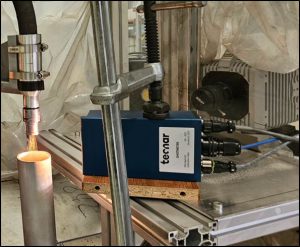
The established process can be strengthened without changing how people work. A chamber‑mounted vision module can score coverage in real time and highlight missed regions so corrective passes are targeted rather than global. Trends in wheel vibration, current, and temperature can be used to plan maintenance before balance or wear affects intensity. Finally, an adaptive controller can make small adjustments to wheel speed, media flow, and conveyor speed by zone. Internal trials suggest this combination can reduce additional passes by around twenty to thirty percent and narrow coverage variation by roughly ten to fifteen percent, while leaving operator roles intact.
conclusion
By placing the wheels where the physics said they belonged, limiting speed to protect thin sections, and treating media quality as a design parameter rather than an afterthought, we turned a difficult, week-long manual routine into a single, steady pass that finishes in about twenty-five minutes. The cell now holds a low Almen A window from end to end with coverage at or above ninety-eight per cent, and the production record is clear enough for anyone to audit. Energy use and carbon per part fell by nearly two orders of magnitude, but the day-to-day difference is simpler: operators have a calmer machine to run, fewer surprises, and results that look the same on Monday morning as they do on Friday night. The next steps—on-device coverage scoring, predictive maintenance, and modest adaptive control—are intended to keep that consistency while trimming re-passes and wear.